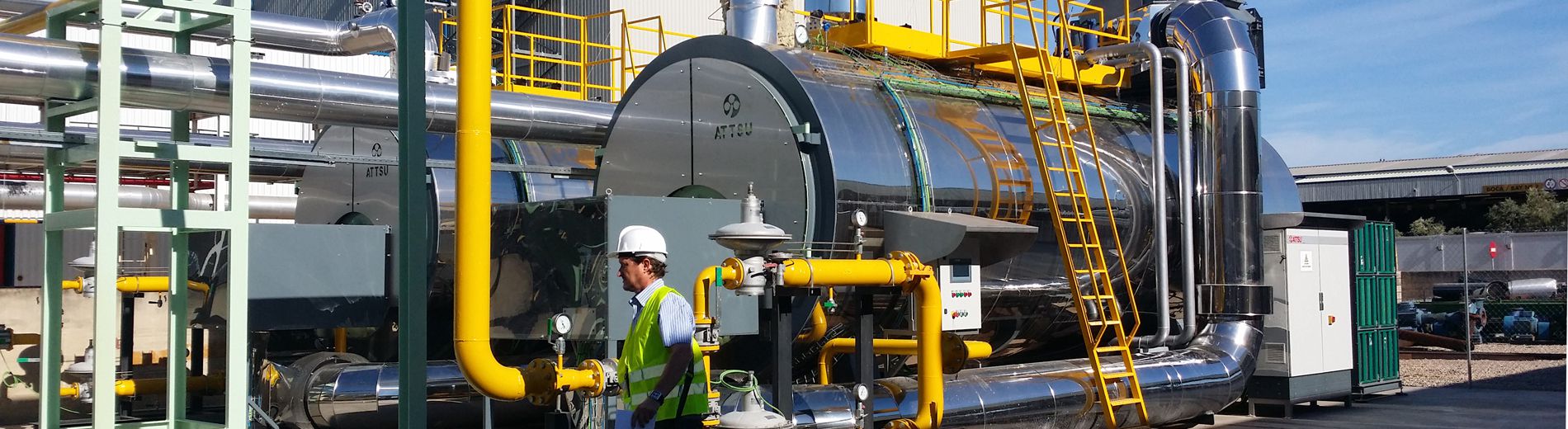

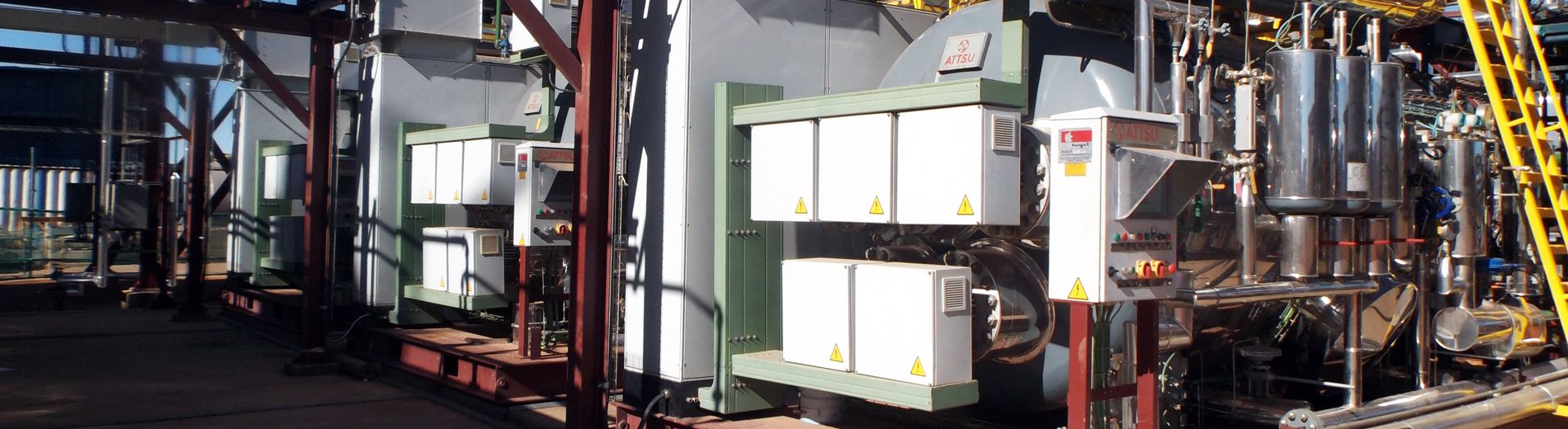




The Attsu HHE Hybrid fire-tube steam boiler makes it possible to prioritize electricity over fuel to produce steam when it is advantageous in terms of cost, renewable energy availability, or a decarbonization strategy. Its hybrid design combines a three-pass fire-tube boiler with pressurized combustion and an electric heating system using high-temperature resistance elements, allowing the plant to select the most suitable energy source at any given time.
Electric priority (5%–50% of steam production):
The user can configure the boiler so that the electric contribution covers from 5% up to 50% of total steam production, using electricity at low voltage (400/690 V) or medium voltage (4160/6600 V) depending on the installation. This allows you to:
- use photovoltaic or other renewable energy surplus,
- shift consumption to off-peak hours or periods with more competitive electricity tariffs,
- reduce burner operation without compromising production continuity.
Typical operating modes to “prioritize” electricity:
1. Electric mode (resistance elements only): steam production using electricity only, within the available range (up to 50% of capacity, depending on model/configuration).
2. Simultaneous hybrid mode: electricity + fuel at the same time to follow demand and improve the cost/emissions profile.
3. Fuel mode with electric support: the burner covers most of the load and electricity provides fine trimming when beneficial.
Emissions and efficiency impact
By increasing the electric share, the plant can reduce direct CO₂ emissions associated with combustion. In fuel operation, the HHE Hybrid is designed for low NOx emissions (<100 mg/Nm³) and offers efficiencies of up to 91%, thanks to optimized geometry, low furnace heat release, and low flue-gas pressure drop.
Optionally, the HHE Hybrid can be equipped with a PLC and protocols such as Modbus or Profibus, enabling automatic electric-priority strategies (based on price signals, renewable availability, process setpoints, or energy management) and integration with SCADA/EMS systems.
The HHE Hybrid is designed so that the plant can produce steam with electricity when it is more economical or cleaner, while retaining the robustness of a fire-tube boiler capable of operating with natural gas, LPG, diesel oil, heavy fuel oil, or biogas, adjusting the energy mix flexibly.
This capability makes the Attsu HHE Hybrid a key tool for decarbonization. During periods of high photovoltaic output or renewable electricity availability, the fuel burner (natural gas, LPG, biogas, diesel oil, or heavy fuel oil) can remain off or at its technical minimum, significantly reducing direct CO₂ emissions from combustion. Integrating this system allows the industrial plant to adapt dynamically to energy-market volatility, prioritizing at each moment the source with the lowest cost or environmental impact available, according to the site’s energy strategy.
As a manufacturer with decades of experience in fire-tube boiler engineering, Attsu applies this technological foundation to the energy transition with hybrid solutions designed for demanding industrial environments. Its HHE boilers, with automation and integration options (PLC and communication protocols such as Modbus or Profibus, depending on configuration), provide a robust, safe steam solution aligned with European regulations.