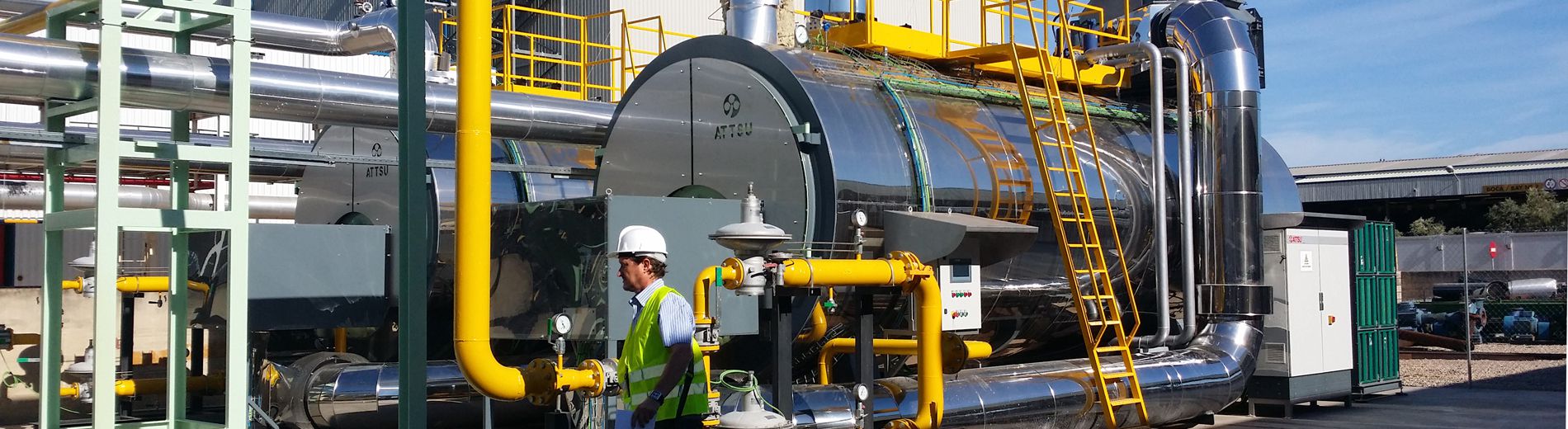

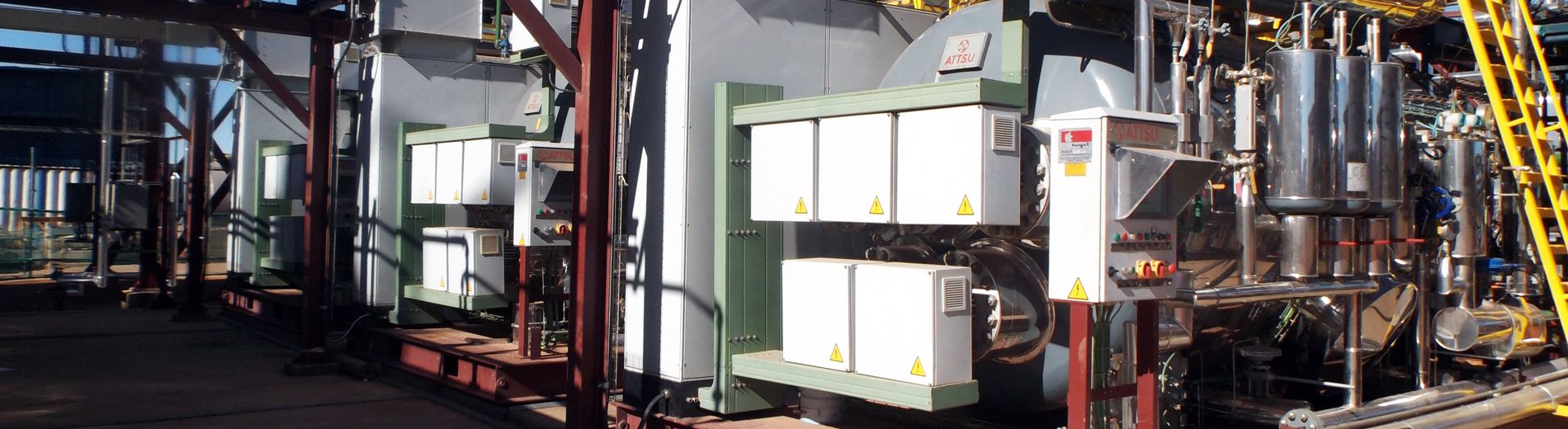




An industrial steam boiler is equipment designed to generate steam from water, using thermal energy to raise the water temperature above its boiling point under controlled pressure. Simply put, it is a closed, metal container that stores water and subjects it to high temperatures and pressures to produce steam, which is then used in industrial processes. In addition to generating steam, some boilers can also heat water for HVAC systems, cleaning processes, or industrial pretreatments.
The operating principle of an industrial boiler is based on heat transfer: thermal energy, which can come from electricity, gas, biomass, or other fuels, heats the water contained inside the boiler until it turns into steam. The steam pressure is higher than atmospheric pressure, which allows it to be transported through pipes and used as an energy source for a wide variety of industrial processes.
Industrial steam boilers are key components in many industries, including food, pharmaceutical, chemical, textile, and power generation, where steam is used for sterilization, cooking, cleaning, heating, reactor warming, or electricity generation. The choice of boiler type depends on the required steam consumption, steam quality, and process characteristics.
Beyond their main function, modern industrial boilers are designed to maximize energy efficiency, reduce radiation losses, and enhance operator safety, complying with strict international manufacturing and control standards. Some models incorporate automated control systems that allow steam production to be modulated according to demand, optimizing energy consumption and minimizing maintenance.

